Unlimited Wants
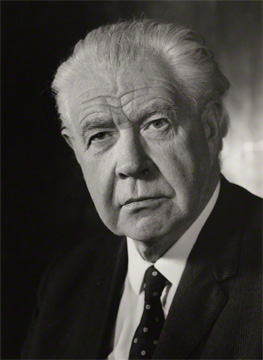 |
| Lionel Robbins popularized the idea of unlimited wants relative to the means of achieving them. |
One of the very first things I learned in my AP Microeconomics class this quarter was the concept that humans have unlimited wants. Naturally, my first thought was, “What?” While it’s a foundational concept in economics, I couldn’t help but think about it afterwards. Why do we have unlimited wants? Is it actually unlimited, or is it just some arbitrarily large, yet finite number?
The concept, at least in economics, is that humans have unlimited wants but limited resources, so our wants will not all be fulfilled. This concept is called scarcity and it forces people to make choices, with each choice leading to a different outcome and having different consequences. This causes so much of microeconomics to arise; in class, we already looked at how prices affect quantity supplied and quantity demanded, and we learned how countries should specialize and trade to maximize production. But it also asks so many questions. What choices does one make given certain conditions? Should I produce more burritos or hamburgers? Is this meal suitably priced at $17? Or could it be sold at $18?
Interpretation
I don’t think I could come up with an infinite list of things that I want, even if I could write infinitely fast. I don’t think anyone wants infinite things; there just don’t exist infinite things possible to want. Rather, I think people constantly want a finite list of things, and that list is never satisfied. Whenever we get something we want, we strive for something more, something greater. Thus, we can never be satisfied. There will always be a next step, so by induction, there will be an infinite number of steps.
Does that mean that chasing our desires is pointless? If we will never be fulfilled, then why do we try so hard to get what we want, just to end up wanting more?
Ramification
I’m sure trying to achieve what we want, then wanting more, is natural (otherwise, it wouldn’t be a core idea of economics). When I got into HCSSiM, an amazing summer program, I spent some of my time worrying about college applications and stressing myself out rather than making friends. And I can imagine when you get a raise and a higher salary, you start wanting more; maybe you hope to travel somewhere, or maybe you want to buy things that were previously unobtainable.
A consequence of wanting more than we can obtain is not having enough time to do everything we want. I want to learn piano, I want to learn how to dance, I want to read more, and I want to become fluent in 17 languages. I want to do so many things that I just don’t have time for. And this is where scarcity rears its ugly head. Time is scarce, and therefore must be allocated ideally to produce the most utility (happiness). Since we don’t have enough time to fulfill all our desires, trying to be as efficient and productive as possible is pointless. Maybe, prioritizing what we want most is what will bring us the most utility. Some things will not get done, and that’s fine.
I also think of unlimited wants in a similar way to competition, in the sense that competition promotes excellence and generally causes people to perform better, but it simultaneously causes a lot of stress and anxiety. People who chase what they want tend to get more of what they want, but I’ve questioned myself many times (“Why am I doing this?”), and I’ve sometimes wondered what would happen if I just decided to stop. I don’t think I will quit, and I don’t think it’s rational to stop chasing what you want. Instead, I’ve learned to enjoy the process, and have fun along the journey to whatever I’m doing.
Just because there’s something you want, that doesn’t mean you can’t be content with what you have. Scarcity shouldn’t prevent you from being happy.
Life Update!
I still write “2025” on my dates sometimes. But it’s becoming less frequent. My classes this semester are honestly not bad. AP Microeconomics, AP Macroeconomics, AP Chemistry, and AP Physics C is certainly a more rigorous load than I expected to take during the spring semester of my senior year. So far, however, everything is going well. Other than my sleep schedule. That still needs to be fixed.
I had my wisdom teeth removed on Friday (two days ago)! I hate it. The process itself isn’t bad; the only thing that somewhat hurt was the IV, and that only lasted five minutes. The anesthesia did its job, and I don’t remember a single thing from the procedure. I do remember having no idea what was going on, my entire mouth numb and my teeth biting down on two bloody pieces of gauze. But that’s fine. The horrible part is the recovery. There are so many things I can’t do, and my diet is extremely limited. I’ve been surviving on yogurt, chicken broth, protein shakes, and whatever else does not require chewing. Additionally, there are so many instructions I must follow, so many things I have to be mindful of, or else I could get a dry socket, and the blood clot could come right off, which is apparently extremely painful.
Swallowing pills sucks too. I have to take ibuprofen every eight hours to lessen the soreness and pain in my jaw. I hate tilting my head backwards like a baby bird and trying to swallow a solid pill. It’s unpleasant every single time, and I almost threw up once. But that’s fine. Hopefully the recovery process is smoother from here on out; we’ll just see what happens.
Comments
Post a Comment